
Biotechnology does not have to live in a glass tower along the I-270 corridor. It can thrive in Talbot County, too.
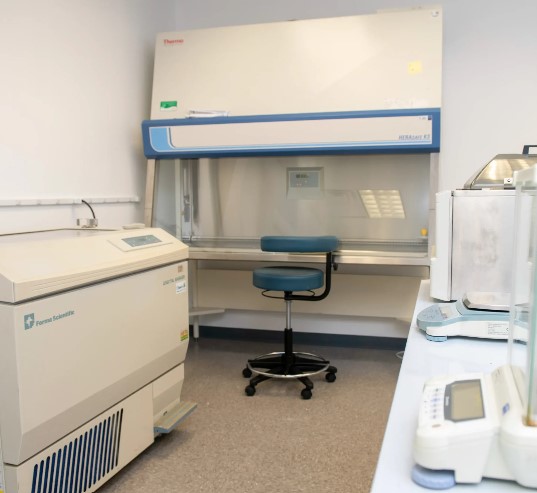
That is the bet behind the F3 Tech Biomanufacturing Facility and Accelerator, a 6,000-square-foot pilot-scale facility in Easton designed to help small and mid-sized biotech companies move from the lab into the marketplace.
F3 Tech is part of the Eastern Shore Entrepreneurship Center. Its job is to help early-stage companies develop, test, and commercialize new technologies tied to agriculture, aquaculture, energy, the environment, and related industries. The new biomanufacturing facility gives those companies something many of them cannot afford on their own: lab space, bioreactors, pilot-scale production capacity, and the technical support needed to prove that an idea can become a product.
That matters because a promising discovery is not the same thing as a business. A product may work in the lab and still fail before it ever reaches a farm, a manufacturer, a customer, or an investor. F3 Tech is trying to close that gap.
“The reason we created the F3 Tech Biomanufacturing Facility here in Easton was to serve as an economic engine for the region,” says Mike Thielke, executive director of F3 Tech. “It serves to attract new, high-growth, innovative and scalable type of businesses to the region, and along with them, the workforce and the investment that comes with that.”
The facility was made possible by $1.65 million in funding, beginning with a $500,000 leadership investment from Talbot County. That local commitment helped leverage $500,000 from the U.S. Economic Development Administration and another $625,000 from Governor Wes Moore’s Equitech Growth Fund.
Thielke understands that this is not the kind of project people immediately grasp. It does not look like a new hotel, restaurant, or retail center. It does not come with an easy picture.
But it may be the kind of project that changes what is possible here.
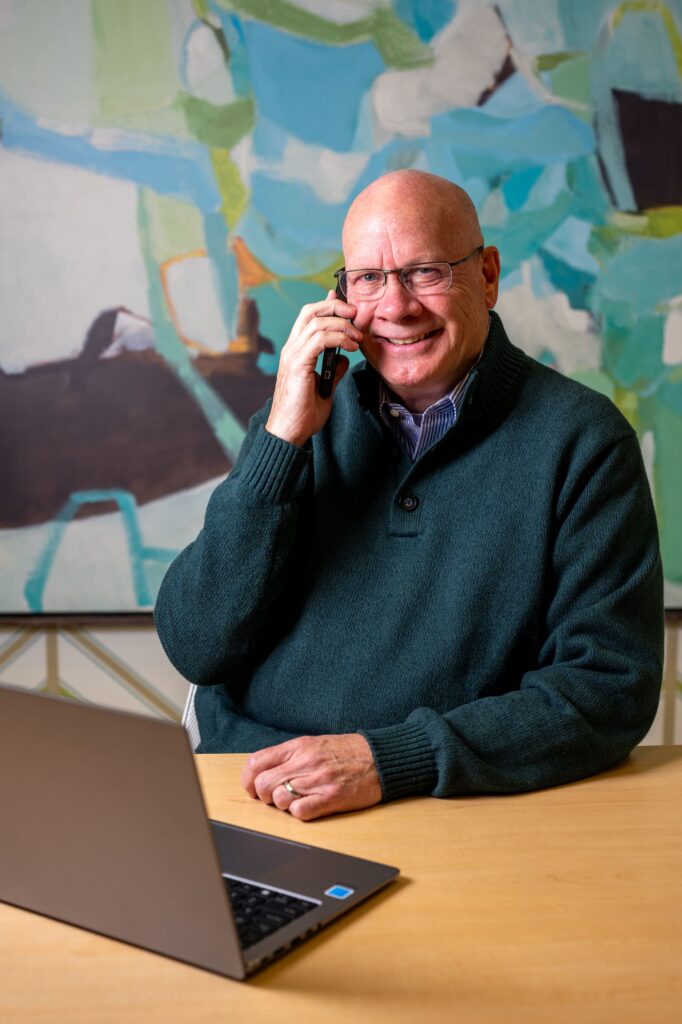
“Talbot County was willing to take a leap of faith and swing for the fences by investing the initial $500,000 into this project,” Thielke says. “This isn’t the typical kind of thing that people think about and look to invest in.”
That is exactly why it is important.
Maryland already has a strong biotechnology sector, but much of it is concentrated in the I-270 corridor and focused heavily on biopharma. F3 Tech is not trying to duplicate that. Thielke sees a different opportunity for the Eastern Shore.
“What we want to do is specialize and differentiate from all of the activity in the I-270 corridor, which is primarily focused on biopharma,” he says. “What we want to focus more on the Eastern Shore is bio-industrial aspects of biotechnology, those kinds of solutions that are based on plant and animal cell technology.”
That is where Talbot County and the Eastern Shore start to make sense.
This region has farms, water, working landscapes, access to biological feedstocks, and room for field testing. It is close enough to Washington, D.C., Baltimore, and Philadelphia to reach investors, regulators, research partners, and federal agencies. But it is not trying to be an urban biotech corridor. It has a different value proposition.
Companies working in bio-industrial biotechnology may need crops, plant material, animal proteins, water-based research, or access to agricultural systems. They may need to test products outside a controlled lab environment. They may need a place where science and production can meet.
That is the lane F3 Tech wants to occupy.
Already, the facility has attracted two early companies. MycoLogic works with a fungus found in the Chesapeake Bay to develop it into a potential fungicide to help protect agricultural crops. Hyacinth Protein is extracting protein from bovine milk to create a vaccine platform.
Those examples help explain the larger point. This is science with a practical end use. It is not innovation for innovation’s sake. It is about products that could affect agriculture, health, energy, materials, and environmental management.
Thielke puts it more simply.
“Nature and biology have already created many of the solutions society needs,” he says. “The challenge for us is to harvest those solutions.”
That idea is not as far removed from the Eastern Shore as it may sound.
The region has always produced problem-solvers. Farmers, watermen, tradespeople, small business owners, and entrepreneurs have long had to figure things out with limited resources. Thielke sees that as part of the region’s strength.
“The Eastern Shore has always been entrepreneurial without really knowing it,” he says. Young people who grow up around farms learn to adapt, repair equipment, work around problems, and keep moving. “It’s just instinctive that people here are entrepreneurial.”
F3 Tech gives that instinct a more formal platform.
It also gives Talbot County a chance to compete for a different kind of job and a different kind of company. These are not commodity businesses. They are high-growth companies with the potential to attract talent, investment, and partnerships.
Thielke believes Talbot County has something to offer that younger workers and entrepreneurs want.
“This is the kind of place that people like to come to,” he says. “Gen Zers and Millennials find an attractiveness to being in Talbot County, but it’s also geographically not that distant away from the urban corridor centers of Washington, D.C., and Philadelphia.”
That combination matters. Quality of life is no longer a soft selling point. It is part of the recruitment strategy. Talbot County can offer access to major markets without asking people to give up small-town life, open space, water, and community.
The larger ambition is to position the Eastern Shore and the greater Delmarva Peninsula as what Thielke has begun calling the “Bio Peninsula,” a region known for plant and animal cell technologies.
That will not happen because of one facility. It will take companies, capital, workforce development, research partnerships, local support, and time.
But the facility gives the region a starting point. It gives entrepreneurs a place to scale. It gives investors something to see. It gives students a reason to imagine a science career close to home. It gives existing agricultural and environmental assets a new role in a growing industry.
Most important, it gives Talbot County a way to build on what it already is instead of chasing something it is not.
The F3 Tech Biomanufacturing Facility and Accelerator is not easy to explain in a sentence. But the idea behind it is straightforward.
Talbot County does not have to become something else to compete in biotechnology. F3 Tech builds on what is already here: land, water, agriculture, science, entrepreneurship, and a long tradition of solving practical problems.
If it succeeds, Easton will not simply be home to promising biotech companies. It will help define a new lane for the Eastern Shore, one rooted in plant and animal cell technologies, bio-industrial innovation, and the belief that rural places can help solve big problems.
About Talbot County Department of Economic Development and Tourism
The Talbot County Department of Economic Development and Tourism’s mission is to enhance and promote a business-friendly environment for current and prospective enterprises and to advocate for policies that support and strengthen the economic vitality of Talbot County. The department’s vision for Talbot County is built on the principles of strong communities, empowered businesses, and innovative solutions.
Never Miss Talbot County Business News:
Subscribe to the Talbot Works newsletter here.
Wait! Before You Go!
Don’t forget to Explore Talbot County with us here.